
GEO Strategy
Researching and developing an AI-optimized SEO/GEO strategy
Year
2025
Summary
When leadership asked for "AI training content," I turned the vague request into a research-backed framework grounded in analytics, chatbot interviews, and search behavior.
Company
NexiGo
GEO Strategy
Researching and developing an AI-optimized SEO/GEO strategy
Year
2025
Summary
When leadership asked for "AI training content," I turned the vague request into a research-backed framework grounded in analytics, chatbot interviews, and search behavior.
Company
NexiGo
SEO/GEO strategy for a world with AI-first readership
In late 2025, NexiGo's leadership team began asking for more "AI training content" on the company blog, meaning content that was designed to help our products appear more frequently in AI-generated search results and chatbot recommendations.
This raised an important question: what does content optimized for AI actually look like? To find out, I researched how search engines and AI models retrieve and present information.
My findings led to a new framework designed not just for human readers, but for the AI systems that increasingly act as intermediaries between brands and customers.
In late 2025, NexiGo's leadership team began asking for more "AI training content" on the company blog, meaning content that was designed to help our products appear more frequently in AI-generated search results and chatbot recommendations.
This raised an important question: what does content optimized for AI actually look like? To find out, I researched how search engines and AI models retrieve and present information.
My findings led to a new framework designed not just for human readers, but for the AI systems that increasingly act as intermediaries between brands and customers.
My role
I researched and developed a repeatable framework for structuring blogs in a way that could be easily extracted and reused by AI systems.
I researched and developed a repeatable framework for structuring blogs in a way that could be easily extracted and reused by AI systems.
Before
Narrative tone
Keywords
sprinkled
throughout
Information
explored
gradually over
multiple
paragraphs


After
Informative tone
Summary &
FAQ blocks
Short
paragraphs
you can read
out of context
Question in
the heading;
answer in the
1st sentence

Discovery Process
To start, I identified these three research questions:
To start, I identified these three research questions:
How do readers discover our blog content?
What makes content easy for AI to parse?
How can we make our content snippable?
How do readers discover our blog content?
What makes content easy for AI to parse?
How can we make our content snippable?
Here, "snippable" means content that is structured so that individual paragraphs are more likely to be extracted for AI summaries.
Here, "snippable" means content that is structured so that individual paragraphs are more likely to be extracted for AI summaries.
Reading study by Pew Research
To answer the question, "How do readers discover our blog content?" I read an existing study by Pew Research. They compared the activity of people using Google search results with AI summaries and without.
While 15% of users with traditional search results would click on a link, only 9% of users with AI summaries in their search results would click on anything.
To answer the question, "How do readers discover our blog content?" I read an existing study by Pew Research. They compared the activity of people using Google search results with AI summaries and without.
While 15% of users with traditional search results would click on a link, only 9% of users with AI summaries in their search results would click on anything.
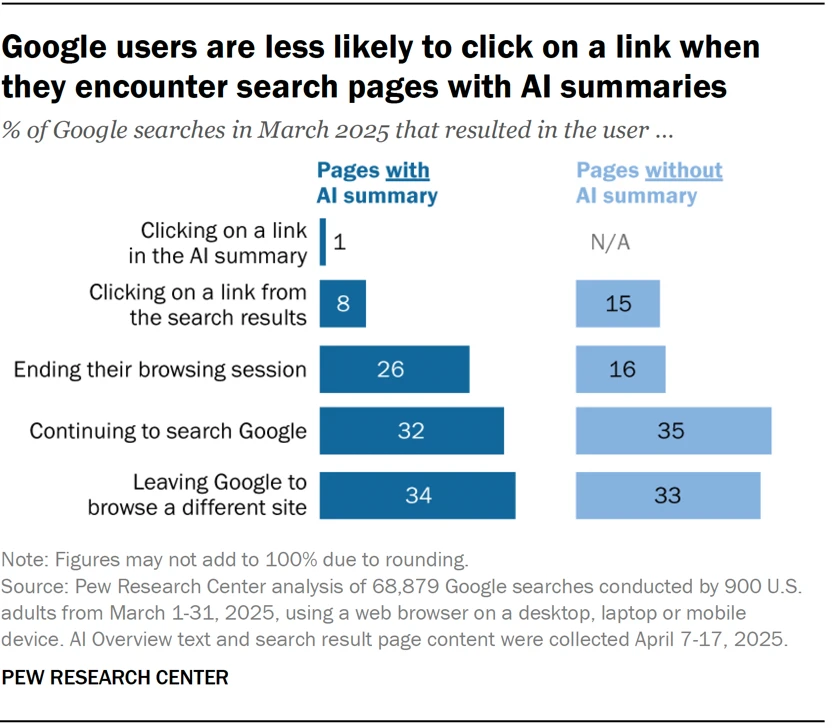
This meant that AI summaries were leading to a 40% reduction in clicks following a Google search. With search results curated by AI and users non-incentivized to click, we weren't competing for traffic, but to be included in that curation.
This meant that AI summaries were leading to a 40% reduction in clicks following a Google search. With search results curated by AI and users non-incentivized to click, we weren't competing for traffic, but to be included in that curation.
Searching our analytics for answers
Over the past year, we had seen a 17.3% increase in purchases resulting from ChatGPT referrals. This confirmed that AI referrals were responsible for a considerable chunk of our sales.
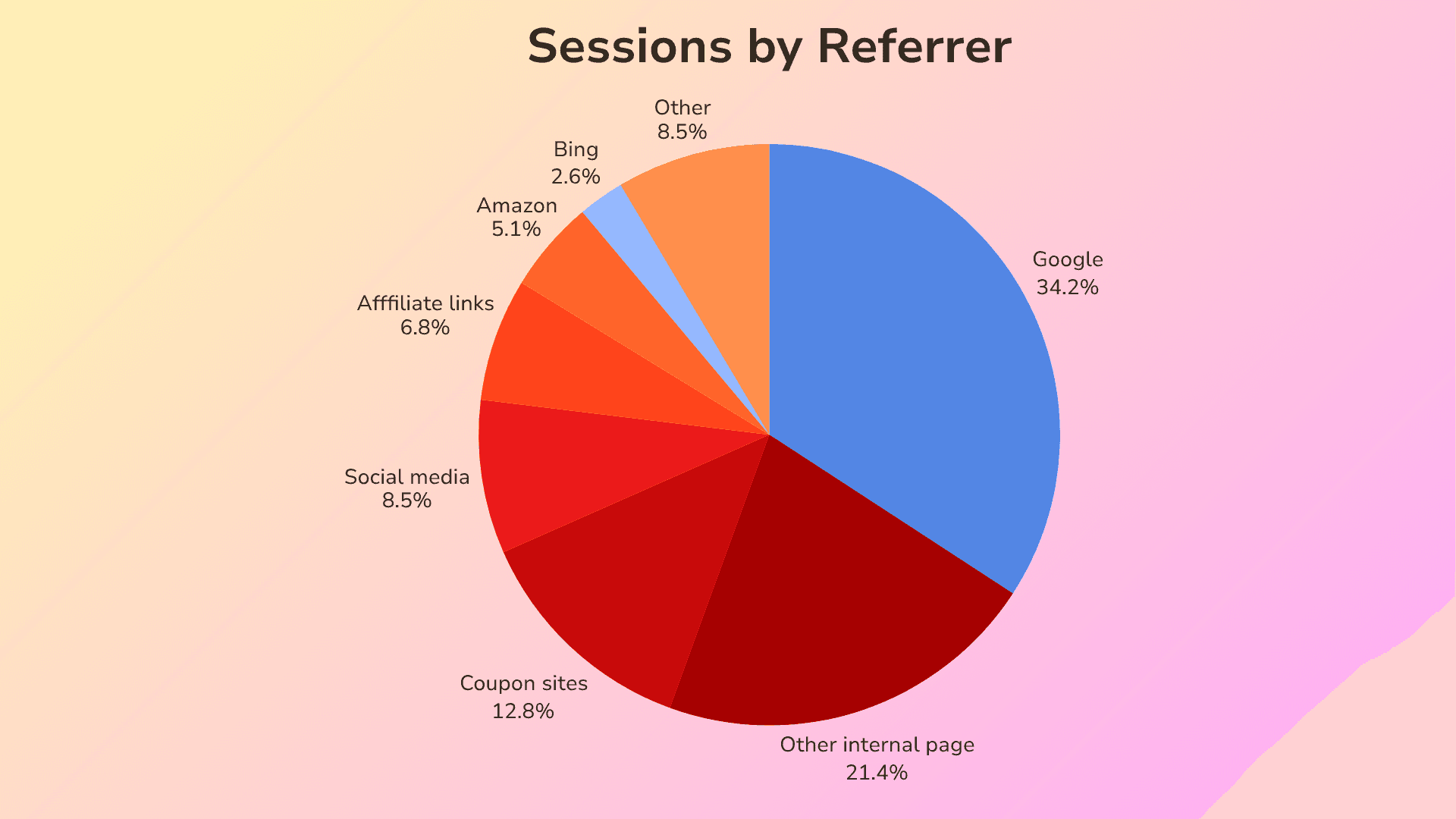
Out of all search engines that referred customers, Google had the largest share, followed distantly by Bing. These were the search engines I would have to target.
Over the past year, we had seen a 17.3% increase in purchases resulting from ChatGPT referrals. This confirmed that AI referrals were responsible for a considerable chunk of our sales.
Out of all search engines that referred customers, Google had the largest share, followed distantly by Bing. These were the search engines I would have to target.
I also noted that the blog “How to Choose the Best Home Theater Projector: A complete guide (2025)” was consistently in the top 10 landing pages across the whole website. Other popular blogs followed similar formats.
I also noted that the blog “How to Choose the Best Home Theater Projector: A complete guide (2025)” was consistently in the top 10 landing pages across the whole website. Other popular blogs followed similar formats.

Reverse-engineering AI results
Next, I broke down the information hierarchy of the AI Overview and People Also Ask sections of a Google search. My hypothesis was that if I reverse engineered their structure, AI would find my content easier to snip.
Next, I broke down the information hierarchy of the AI Overview and People Also Ask sections of a Google search. My hypothesis was that if I reverse engineered their structure, AI would find my content easier to snip.
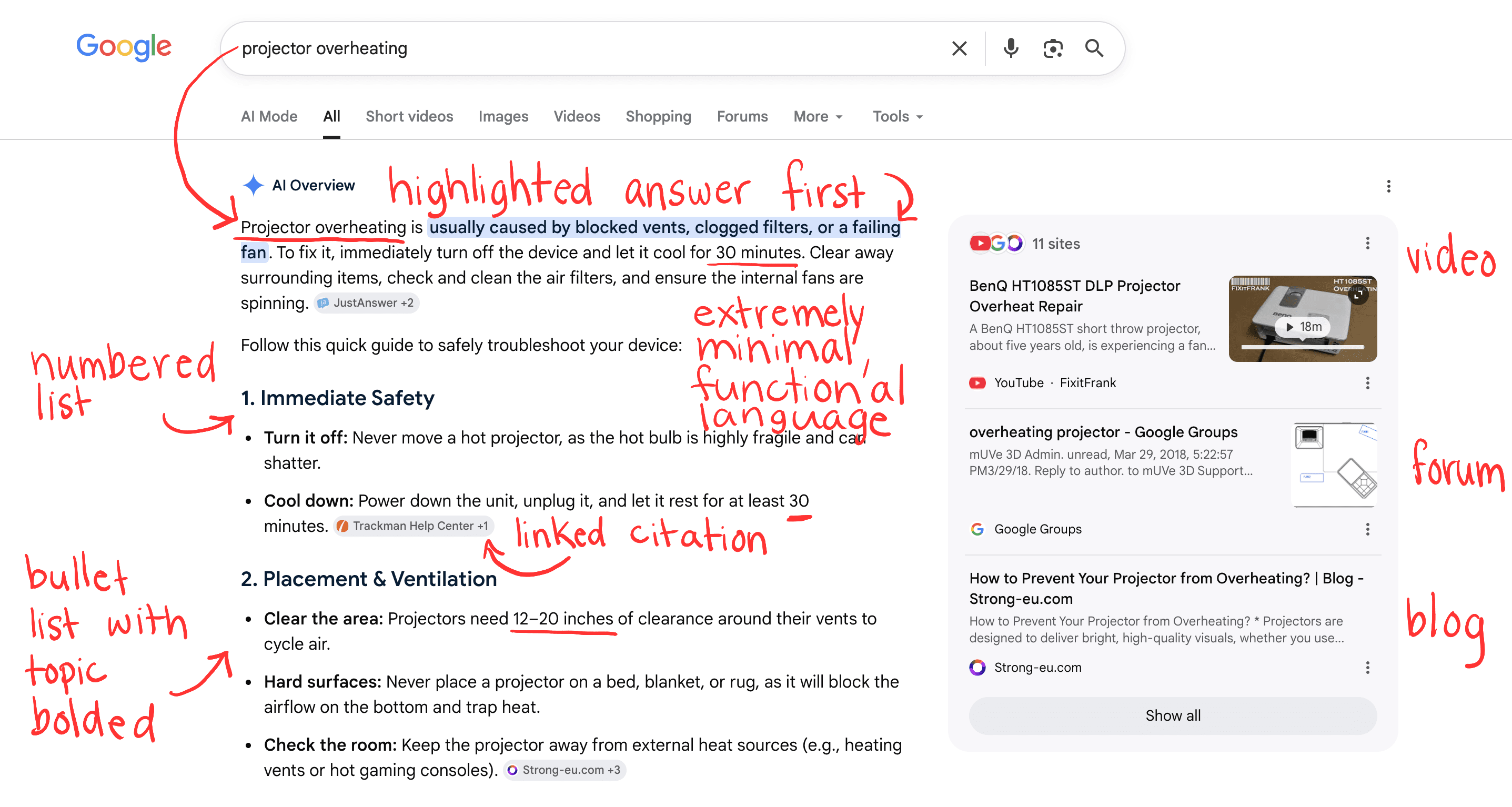
This told me I had to restructure my content so the answer comes first, and follow up info is cited and ideally formatted into a bullet point list.
This told me I had to restructure my content so the answer comes first, and follow up info is cited and ideally formatted into a bullet point list.
Interviewing LLM chatbots
My research wouldn’t be complete without interviewing the AI models who were reading and recommending the content. I conversed with ChatGPT, Claude, Gemini, and Copilot and compared their responses. Most gave similar responses, with some notable distinctions.
My research wouldn’t be complete without interviewing the AI models who were reading and recommending the content. I conversed with ChatGPT, Claude, Gemini, and Copilot and compared their responses. Most gave similar responses, with some notable distinctions.
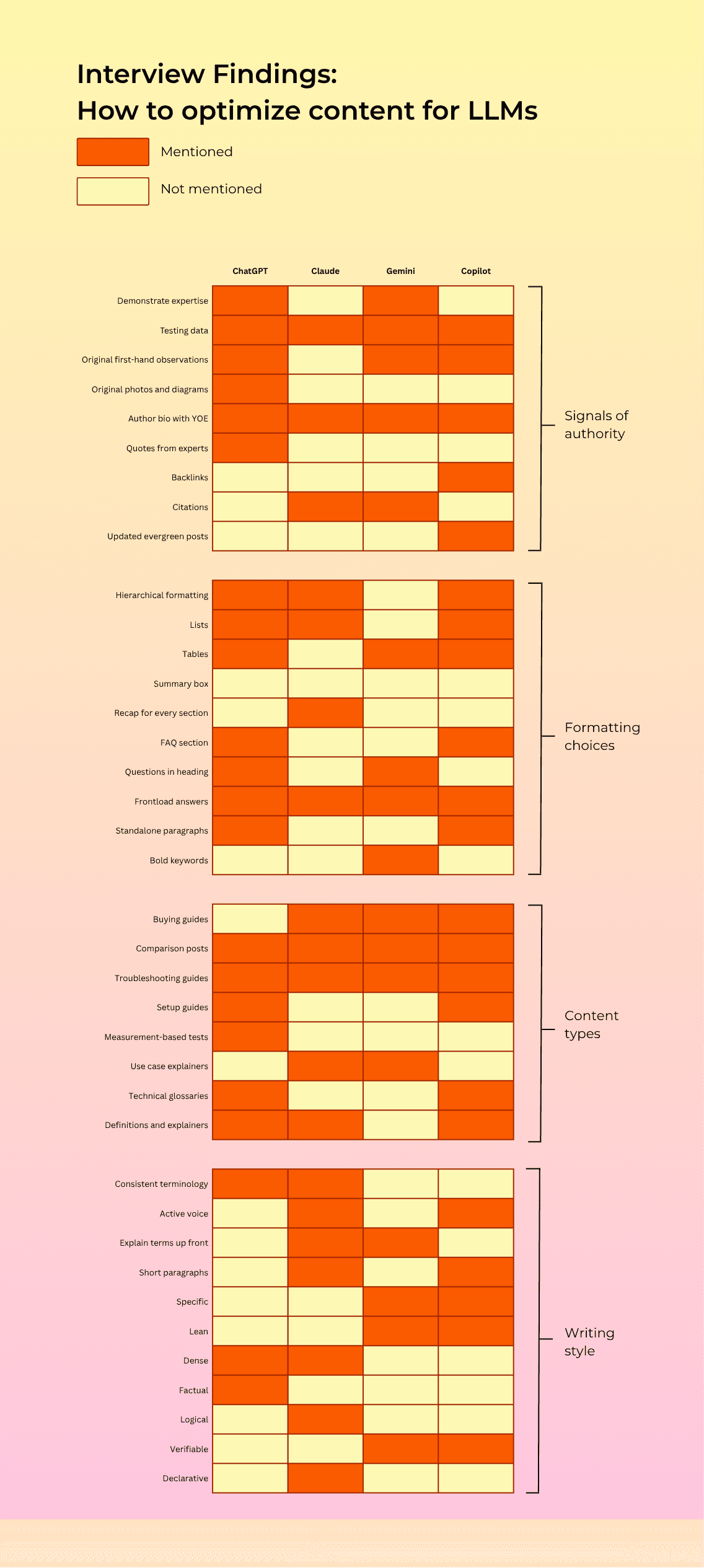
All four chatbots called for hard metrics, testing data, and citations. These would signal that the author is a credible authority on the subject. This made sense; as a reader I appreciate the same things. Still, this insight surprised me, because it’s so rare for content to contain hard data. I would not have guessed this was an important component of SEO/GEO based on successful blogs I’d read.
Interestingly, Claude gave more writing advice than any other chatbot, with tips on active voice, brevity, and tone of voice comprising 27% of its advice.
However, Gemini was the only model to give frameworks for writing, such as EEAT (Experience, Expertise, Authoritativeness, Trustworthiness) and BLUF (bottom line up front).
All four chatbots called for hard metrics, testing data, and citations. These would signal that the author is a credible authority on the subject. This made sense; as a reader I appreciate the same things. Still, this insight surprised me, because it’s so rare for content to contain hard data. I would not have guessed this was an important component of SEO/GEO based on successful blogs I’d read.
Interestingly, Claude gave more writing advice than any other chatbot, with tips on active voice, brevity, and tone of voice comprising 27% of its advice.
However, Gemini was the only model to give frameworks for writing, such as EEAT (Experience, Expertise, Authoritativeness, Trustworthiness) and BLUF (bottom line up front).
Key insights
All my research pointed to the same conclusion: we had to reformat how blogs were written in order to show up in both search results and AI summaries.
All my research pointed to the same conclusion: we had to reformat how blogs were written in order to show up in both search results and AI summaries.
How do readers discover our blog content?
Finding: AI summaries and chatbot referrals are growing traffic sources.
Action: Prioritize blog formats commonly surfaced in AI-generated answers.
Finding: AI summaries and chatbot referrals are growing traffic sources.
Action: Prioritize blog formats commonly surfaced in AI-generated answers.
What makes content easy for AI to parse?
Finding: Structured content is easier to extract and summarize.
Action: Use summary blocks, tables, FAQ sections, and consistent hierarchy.
Finding: Structured content is easier to extract and summarize.
Action: Use summary blocks, tables, FAQ sections, and consistent hierarchy.
How can we make our content snippable?
Finding: Leading with direct answers and writing self-contained paragraphs increases the likelihood of extraction.
Action: Lead with direct answers, followed by citations and data. Write lean, informationally rich paragraphs that can be understood without other context.
Finding: Leading with direct answers and writing self-contained paragraphs increases the likelihood of extraction.
Action: Lead with direct answers, followed by citations and data. Write lean, informationally rich paragraphs that can be understood without other context.
Traditional SEO vs AI-Optimized SEO (GEO)
Traditional SEO | AI-Optimized SEO (GEO) |
|---|---|
| Relies on keywords to show up in results | Greater emphasis on structure and formatting |
| Humans make search queries using keywords | Humans ask questions in a conversational tone |
| Headers make it easy to scan and skip to specific information | Headers introduce new topics; every H1 header is a new opportunity to answer a snippable question |
| Answer one big question thoroughly | Answer many questions with brevity |
| Designed to be read or skimmed over by a human, roughly beginning to end | Designed to be parsed by an AI, then shared with a human in a non-linear fashion, or in alternate contexts |
| Written in a narrative tone | Written in an authoritative tone |
| Repeats keywords, but one topic builds upon the last | Repeats keywords and topics; every paragraph must be possible to read out of context |
New Framework
I created this new template that shows how blogs should be organized for GEO. This enabled anyone on the team to author a blog post that can easily be parsed and snipped by AI.
I created this new template that shows how blogs should be organized for GEO. This enabled anyone on the team to author a blog post that can easily be parsed and snipped by AI.
Summary Block
After the introduction, but before the rest of the article, is a summary block with all the most important points from the article.
After the introduction, but before the rest of the article, is a summary block with all the most important points from the article.

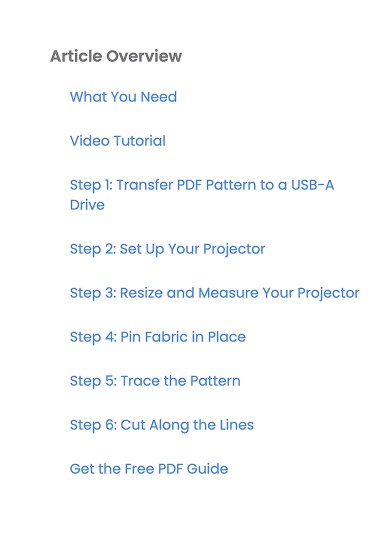
Screenshot from example blog
Screenshot from example blog
Unlike a recipe or lifestyle blog, the goal of a company blog is not to hook the reader and give them the most important information at the bottom of the page so that they spend more time reading. Rather, the goal is to tell the reader (human or AI) up front that they’re in the right place to get their questions answered.
Unlike a recipe or lifestyle blog, the goal of a company blog is not to hook the reader and give them the most important information at the bottom of the page so that they spend more time reading. Rather, the goal is to tell the reader (human or AI) up front that they’re in the right place to get their questions answered.
Heading 1 - Question or Topic
Each H1 introduces a new question or topic, and the first sentence needs to answer the question. In order, the sentences should:
Each H1 introduces a new question or topic, and the first sentence needs to answer the question. In order, the sentences should:
Answer or definition in the first sentence
Explain why it matters & give relevant data
Explain the context, including product name drops
Answer or definition in the first sentence
Explain why it matters & give relevant data
Explain the context, including product name drops
Essentially, we need to follow the Inverted Pyramid structure for information hierarchy to the extreme, with each step down the pyramid covered in only a sentence or two.
Essentially, we need to follow the Inverted Pyramid structure for information hierarchy to the extreme, with each step down the pyramid covered in only a sentence or two.

Heading 2 - Relevant topics. This could be:
Each H2 expands on the topic introduced in H1. Content could include:
Each H2 expands on the topic introduced in H1. Content could include:
Answers to long-tail questions
Step-by-step tutorials
Side-by-side comparisons
Bullet Point Lists
Tables
Answers to long-tail questions
Step-by-step tutorials
Side-by-side comparisons
Bullet Point Lists
Tables
Repeat with as many H2s and H1s as needed. The more questions are answered and terms are defined, the more opportunities the article has to land in someone’s search results.
Repeat with as many H2s and H1s as needed. The more questions are answered and terms are defined, the more opportunities the article has to land in someone’s search results.

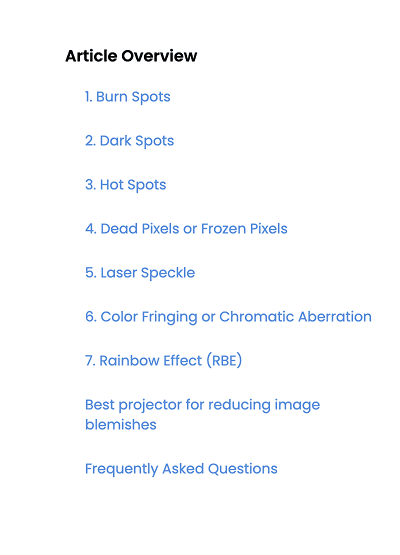
Screenshot from example blog
Screenshot from example blog
FAQ section
After the outro, the blog ends with an accordion-style FAQ section. Each question features a quick, to-the-point answer.
After the outro, the blog ends with an accordion-style FAQ section. Each question features a quick, to-the-point answer.

Screenshot from example blog
Screenshot from example blog
Writing for human readers under this new framework
The framework gets content into AI summaries, but blogs are still written for human readers. These additional elements keep the experience from feeling clinical.
The framework gets content into AI summaries, but blogs are still written for human readers. These additional elements keep the experience from feeling clinical.
Storytelling in the introduction
While the question-answer-question-answer approach is effective in getting content into AI summaries, the finished content feels clinical.
To connect with readers, we can put a human touch in the intro. AI tends to skip over these sections, but human readers looking for connection will read the whole thing if it tells a story.
A hook, an anecdote, or some commentary on the topic at large signals that the content was written by a human, for a human.
While the question-answer-question-answer approach is effective in getting content into AI summaries, the finished content feels clinical.
To connect with readers, we can put a human touch in the intro. AI tends to skip over these sections, but human readers looking for connection will read the whole thing if it tells a story.
A hook, an anecdote, or some commentary on the topic at large signals that the content was written by a human, for a human.
Including more visual assets
Have you noticed the trend of text-only company blogs? The information is generally organized into bullet points and keyword-rich summaries, but there are no images. A text-heavy blog with no images is one that is made to be parsed by AI, rather than read by a human. This is one of the biggest signals that the text was written by AI, for AI.
Humans love visuals. By incorporating pictures, charts, and embedded videos for every heading, we build credibility with our human readers. These elements also make the story we're trying to tell more memorable.
The irony of a text-only approach is that the same original images, videos, and data-filled charts that resonate with human readers are also more likely to get the blog flagged as a credible source by AI. Plus, these assets help the blog article place in the Images and Videos tabs of a Google Search.
Have you noticed the trend of text-only company blogs? The information is generally organized into bullet points and keyword-rich summaries, but there are no images. A text-heavy blog with no images is one that is made to be parsed by AI, rather than read by a human. This is one of the biggest signals that the text was written by AI, for AI.
Humans love visuals. By incorporating pictures, charts, and embedded videos for every heading, we build credibility with our human readers. These elements also make the story we're trying to tell more memorable.
The irony of a text-only approach is that the same original images, videos, and data-filled charts that resonate with human readers are also more likely to get the blog flagged as a credible source by AI. Plus, these assets help the blog article place in the Images and Videos tabs of a Google Search.
Outcome
The results of this case study are ongoing. Because AI-generated results vary by user, platform, and region, measuring visibility remains challenging.
However, I identified multiple instances where articles built using this framework appeared in Gemini-generated summaries, providing early evidence that the approach was working.
The project transformed an undefined request for "AI training content" into a documented content framework that could be applied across future blog articles.
The results of this case study are ongoing. Because AI-generated results vary by user, platform, and region, measuring visibility remains challenging.
However, I identified multiple instances where articles built using this framework appeared in Gemini-generated summaries, providing early evidence that the approach was working.
The project transformed an undefined request for "AI training content" into a documented content framework that could be applied across future blog articles.